Democratising Premium TV: What Comcast's Universal Ads Means for Advertisers
24/06/2026 5:50 PM
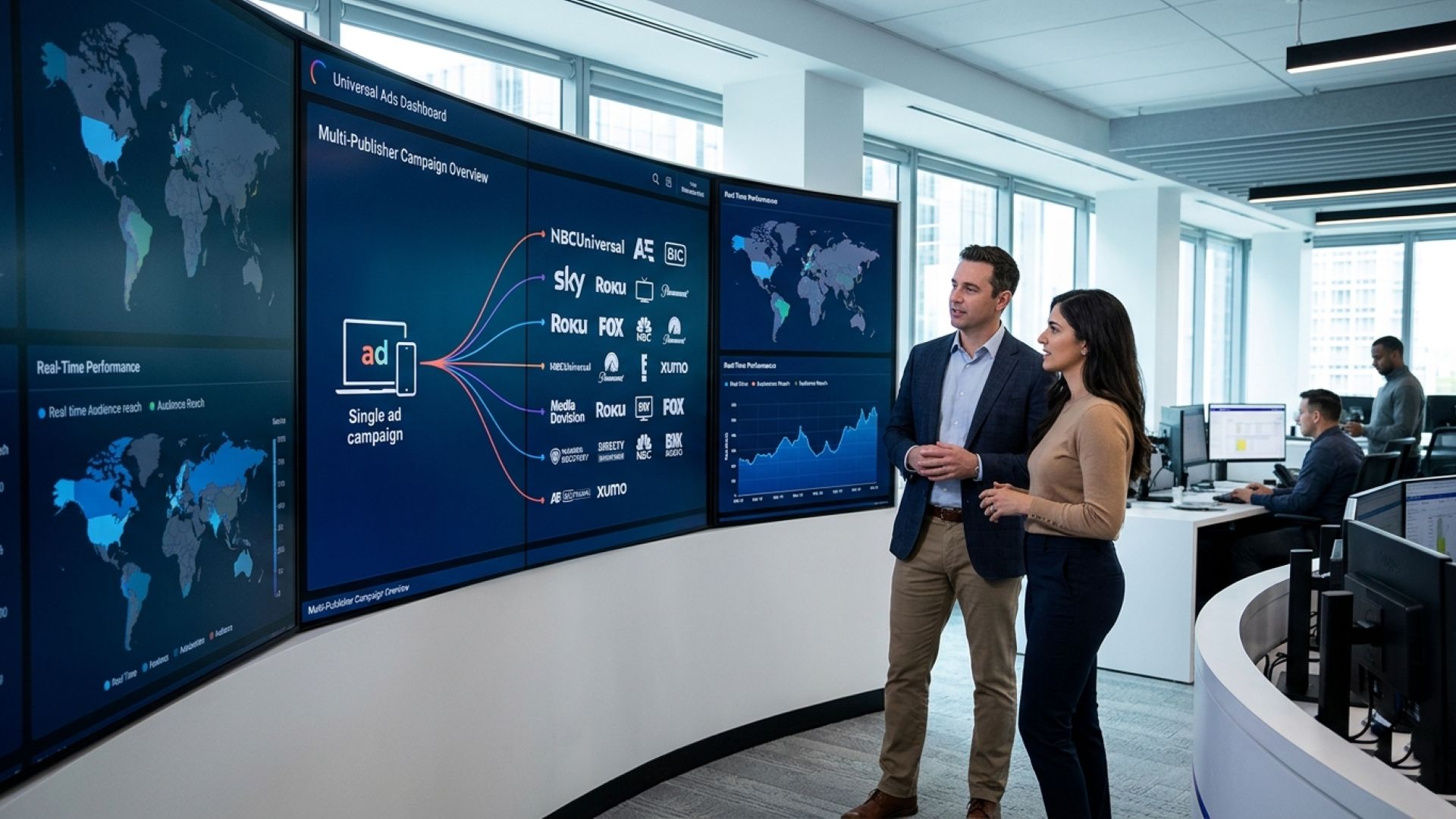
The official UK launch of Comcast's Universal Ads, in partnership with ITV, Channel 4, and Sky, marks a notable shift in democratising TV advertising for small and medium-sized enterprises (SMEs). By aiming to make premium TV ad buying "as simple as social," this self-service platform lowers the entry barrier for emerging brands while introducing a unified buying model across major broadcasters. As digital-native and DTC advertisers assess these new opportunities, this development is expected to reshape campaign planning, shift budget allocations, and require robust independent verification to ensure performance integrity.
What We Think
The launch of Comcast's Universal Ads in the UK represents a meaningful evolution for the TV advertising ecosystem. By uniting the sales houses of ITV, Sky, and Channel 4 into a single self-service interface, the platform provides SMEs with a streamlined pathway to premium, brand-safe media. However, while simplified TV buying presents an opportunity for growth-focused brands, it also introduces new complexities in cross-publisher attribution, frequency management, and budget optimization that advertisers must carefully navigate.
Democratising Premium TV for SMEs and DTC Brands
Historically, linear and addressable TV advertising has often been perceived as cost-prohibitive and operationally complex for smaller, fast-growing brands. Universal Ads directly addresses this barrier by offering a self-service interface that mirrors the simplicity of social media platforms. By allowing advertisers to set budgets, define target parameters, and go live across the three major commercial broadcasters in minutes, the platform is poised to attract a wave of new-to-TV advertisers. For direct-to-consumer (DTC) and digitally-native brands, this provides a scalable alternative to increasingly saturated and signal-deprived digital channels.
A Unified Buying Model and Simplified TV Access
Traditionally, executing a multi-broadcaster campaign in the UK required dealing with separate sales houses, navigating distinct buying protocols, and managing disparate reporting frameworks. Universal Ads simplifies this process by enabling a single campaign to span ITV Media, Sky Media, and Channel 4 Sales simultaneously. This consolidated approach reduces the administrative burden on growing businesses and mid-sized agencies. However, the operational efficiency of a single-portal buy must be balanced with careful campaign management to prevent audience duplication and ensure optimal reach distribution across the participating networks.
Bridging the Gap Between TV Reach and Digital Performance
A primary appeal of the new platform is its promise to deliver the trust and brand safety of premium TV alongside the direct attribution typically associated with social and digital media. With built-in first-party pixel measurement, advertisers can link TV impressions directly to digital outcomes such as web visits, sign-ups, and purchases. This performance-driven approach makes TV highly attractive to performance-oriented marketers. Yet, relying solely on platform-owned attribution tools can present challenges in multi-channel environments, highlighting the ongoing need for impartial validation.
The Auditor's Perspective: Performance Integrity and Multi-Publisher Auditing
From a media auditing and verification standpoint, the introduction of a unified, self-service TV buying platform introduces unique measurement challenges that brands must prepare for:
The Risk of Over-Reliance on First-Party Attribution: While Universal Ads’ first-party pixel measurement is a helpful tool for tracking immediate web response, platform-hosted attribution can sometimes present an optimistic view of performance. To avoid double-counting conversions across search, social, and TV, advertisers should implement independent, multi-touch attribution (MTA) frameworks to understand the true incremental value of their TV investment.
Managing Co-Viewer and Frequency Waste: Launching campaigns quickly across multiple broadcasters increases the risk of frequency build-up and audience duplication among heavy TV viewers. Independent auditing remains essential to analyse campaign delivery data, ensuring that the unified buy is genuinely expanding reach rather than repeatedly exposing the same households across different networks.
Independent Third-Party Verification Readiness: Although the platform is built on an API-first foundation and plans further integrations with third-party measurement partners (such as Lantern in 2027), advertisers should seek independent verification early. Standardising campaign metrics across ITV, Sky, and Channel 4 from the outset ensures that budget allocations remain aligned with actual performance benchmarks.
The UK launch of Comcast's Universal Ads offers an interesting evolution for the TV advertising landscape, making premium, brand-safe broadcast media more accessible to a broader pool of brands. Yet, as the lines between digital simplicity and traditional television continue to blur, maintaining strict standards of transparency and verification remains paramount. Collaborating with independent media auditors can allow emerging and scaling brands to maximize the efficiency of their unified TV spend, safeguard their budgets, and accurately measure the true impact of their campaigns.
Media Audit Guide
Find out the key steps involved in media auditing
Looking to improve your reporting? Access our media audit guide for a comprehensive breakdown of key auditing parameters, complete with example charts and dashboards.
